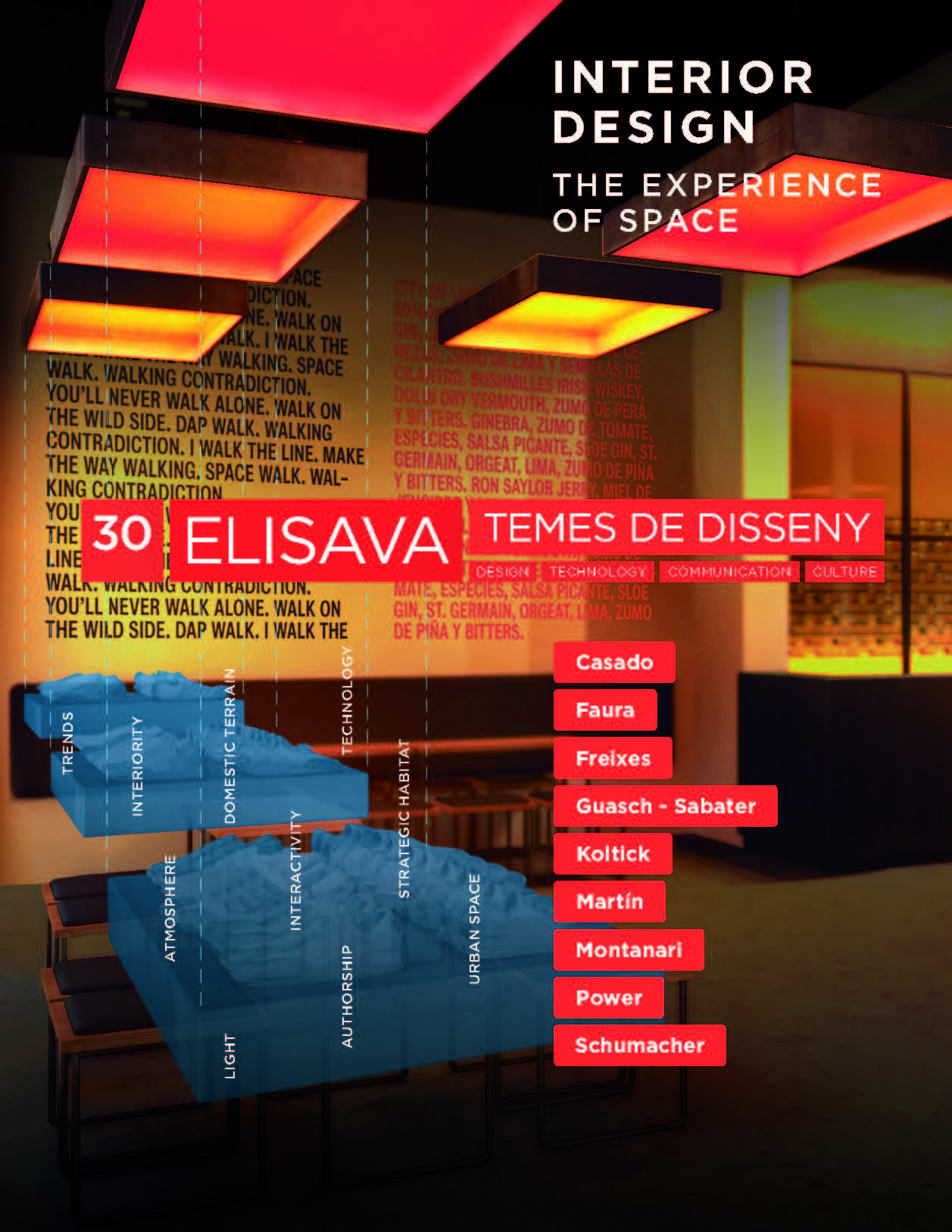
As a result of the profound social, economic and technological changes of the past few decades, the project of interior space seems to call for different approaches. The swift mutation of our surroundings requires equally swift responses that interior design must balance with its undeniable symbolic value and social responsibility.
Issue number 30 of ELISAVA Temes de Disseny proposes we rethink the meaning of designing space in the twenty-first century and consider which new elements should be introduced in design projects, regardless of which field they may come from (habitat, retail, contract, etc.).
This rethinking process produces three basic approaches that are explored more or less intensely in all the articles. On the one hand, a consideration of space itself as an element with symbolic and representative values able to reflect a certain tradition, culture or the creativity of a specific author, and the potential of transforming and improving our surroundings. Secondly, a study of the links between interior design, space and society focusing on the uses and functions derived from these, which must be met by elements of spatial design (flexibility, serialisation, concretion, typology, models, etc.) that will respond to the demands of the new circumstances and new local and global needs. Thirdly, an attention to the implication of new technologies and materials in the configuration of space, in a field that is constantly growing in complexity and increasingly welcoming new agents from other spheres of creativity and knowledge.
---
Editors: Albert Fuster and Raffaella Perrone
---